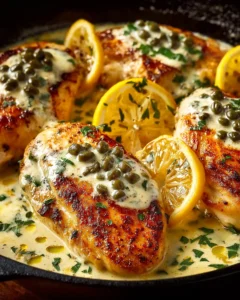
If you’re looking for the best chicken piccata recipe, you’ve landed in the right place. This dish is a timeless favorite, blending zesty lemon, savory capers, and golden pan-fried chicken into a creamy, comforting meal that’s ready in under 30 minutes. Chicken piccata is known for its bold yet balanced flavors, and with just a few pantry staples and fresh ingredients, you can recreate a restaurant-worthy meal right at home. Whether you’re cooking for a family dinner or impressing guests, this version delivers unforgettable taste without the fuss.
With a perfect combination of buttery richness, citrus brightness, and a velvety cream sauce, this chicken piccata is versatile enough for a weeknight dinner and elegant enough for a special occasion. It’s easy to make, requires only one skillet, and pairs beautifully with simple sides like mashed potatoes or steamed vegetables.
Let’s break down this flavorful classic and explore how to get golden, juicy chicken in every bite, a silky sauce with just the right tang, and tips that ensure your piccata turns out flawless every time.
Choosing the Right Chicken for Piccata
Thin Cutlets Are Key to Quick Cooking
One of the secrets to the best chicken piccata recipe lies in the cut of the meat. You want to start with two large chicken breasts and slice them lengthwise to create four thin, even cutlets. This not only speeds up the cooking process but also ensures that each piece gets evenly coated in that flavorful golden crust.
Butterflying and halving the chicken allows it to cook through without drying out. If you’re working with smaller chicken breasts, you may not need to slice them, but be prepared to adjust the cooking time to ensure they’re cooked properly. A uniform thickness of about half an inch works best for achieving a tender interior with a crispy exterior.
Seasoning and Flour Dredge for Flavor and Texture
Before pan-frying, season your chicken generously with salt, pepper, and a hint of garlic powder. This step builds the flavor base for the entire dish. Dredging the chicken lightly in flour does two things: it helps the cutlets develop a beautiful golden crust when seared and also thickens the sauce later when deglazed.
The flour should be just enough to coat each piece without clumping. Shake off any excess to prevent the flour from burning in the pan. This thin coating contributes to the signature velvety texture that makes chicken piccata so appealing.
Use the Right Pan and Fat for the Perfect Sear
To cook the chicken evenly and achieve that crispy finish, a wide skillet is essential. Add two tablespoons of butter and one tablespoon of olive oil over medium-high heat. The butter adds richness, while the olive oil prevents it from burning. When the pan is hot enough that the chicken sizzles upon contact, it’s ready.
Cook the chicken for about four to five minutes per side, or until it’s golden brown and cooked through. You want a slight crust that holds up in the creamy sauce without becoming soggy. Once done, transfer the chicken to a plate and set it aside while you build the sauce.
Print
The Best Chicken Piccata Recipe
- Total Time: 25 minutes
- Yield: 4 servings
Description
This is the best chicken piccata recipe with juicy chicken cutlets simmered in a creamy lemon-caper sauce. Quick, flavorful, and perfect for any occasion.
Ingredients
2 large chicken breasts
Salt & pepper to taste
1/4 teaspoon garlic powder
Flour (for dredging)
4 tablespoons butter, divided
1 tablespoon olive oil
1/4 cup chicken broth
1 tablespoon lemon juice
Zest of 1 lemon
1 tablespoon brined capers, drained
1/2 cup heavy/whipping cream
Chopped parsley (optional)
Freshly grated cheddar cheese (optional)
Instructions
1. Slice the chicken breasts lengthwise to make 4 thinner cutlets. Trim fat. Season with salt, pepper, and garlic powder. Coat with flour.
2. Heat 2 tablespoons of butter and olive oil in a skillet over medium-high heat.
3. Cook the chicken for 4–5 minutes per side until golden. Transfer to a plate.
4. Turn off heat. Add chicken broth, lemon juice, zest, remaining butter, and capers. Scrape up browned bits.
5. Stir in cream. Return to heat until bubbling. Add chicken back to skillet.
6. Simmer for 5 more minutes until sauce thickens and chicken is cooked through.
7. Garnish with parsley and cheddar cheese if desired. Serve immediately.
Notes
If using smaller chicken breasts, no need to slice them — just increase cooking time.
To make without cream, increase chicken broth to 3/4 cup.
Use low-sodium broth if sensitive to salt.
Great served over mashed potatoes, rice, or pasta.
- Prep Time: 5 minutes
- Cook Time: 20 minutes
- Category: Main Course
- Method: Stovetop
- Cuisine: American
Building the Signature Lemon-Caper Sauce
Deglazing the Pan for Maximum Flavor
After removing the golden chicken cutlets from the skillet, the next step is where the magic begins. With the heat temporarily off, pour in the chicken broth, freshly squeezed lemon juice, lemon zest, the remaining two tablespoons of butter, and a tablespoon of drained brined capers. These ingredients are essential to achieving that signature tangy, buttery piccata flavor.
As you stir the mixture, use a wooden spoon or spatula to scrape up the browned bits left behind by the chicken. These caramelized bits, known as fond, are flavor gold. They dissolve into the sauce and infuse it with rich, savory depth that no seasoning or stock alone can replicate.
Creamy vs. Classic: Choosing Your Sauce Texture
Traditionally, chicken piccata is made without cream, resulting in a thinner, more lemon-forward sauce. However, for a modern twist that adds luxurious texture and balances the acidity, this recipe includes half a cup of heavy or whipping cream. Stir it in after the sauce has simmered slightly, and watch as it transforms into a silky, light-golden coating.
If you prefer a dairy-free or lighter version, simply omit the cream and increase the chicken broth to about three-fourths of a cup. The sauce will still thicken beautifully, thanks to the flour coating on the chicken, and retain its signature bold citrus character.
Regardless of which version you choose, simmer the sauce gently. Avoid high heat at this stage, as it can cause the cream to separate or the sauce to reduce too quickly. Once it begins bubbling gently, return the chicken cutlets to the pan so they can soak in the flavors.
Letting the Chicken Reheat in the Sauce
Reintroducing the chicken to the sauce isn’t just about warming it up. It’s a vital step in ensuring the cutlets are coated with that lemony, caper-infused cream and absorb the flavors. Simmer for about five more minutes, allowing the sauce to thicken and the chicken to reach full doneness.
If the sauce reduces more than you like, simply add a splash more broth to loosen it. On the other hand, if it feels too thin, allow it to simmer uncovered for a minute or two longer until it reaches the consistency you prefer.
This is the point where your kitchen starts to smell irresistible, and you’re only moments away from serving one of the most satisfying chicken dishes you’ll ever make.
Perfect Sides and Serving Suggestions
What to Serve with Chicken Piccata
The best chicken piccata recipe deserves the right supporting cast. This dish shines when paired with simple, neutral sides that complement the tangy, creamy sauce without overpowering it.
Mashed potatoes are a comforting choice, soaking up the velvety sauce beautifully. Steamed jasmine or basmati rice also works well, especially if you want a lighter, fluffier texture on the plate. For a low-carb option, cauliflower mash or sautéed spinach will keep the meal satisfying yet balanced.
Pasta, especially angel hair or linguine, is another popular option. The thin noodles hold onto the lemon-butter sauce perfectly and turn a single-skillet chicken dish into a full, hearty meal.
Adding Vegetables for a Balanced Plate
Since chicken piccata has such a bold flavor profile, mild vegetables pair best. Steamed green beans, roasted zucchini, or blanched asparagus spears make excellent companions. You can drizzle a spoonful of the piccata sauce over the veggies for extra zest and cohesion on the plate.
For something more colorful, try a quick sauté of bell peppers and cherry tomatoes in a bit of olive oil with salt and pepper. This adds brightness and texture, especially if you’re skipping pasta or rice.
The key is balance. Let the sauce take center stage and build your meal around its buttery, citrus-forward richness. Choose sides that support without competing.
Garnish Ideas That Add the Finishing Touch
While garnishes are optional, they elevate both the presentation and flavor of the final dish. A sprinkle of freshly chopped parsley adds freshness and contrast to the creamy sauce. For a bit more richness, a small amount of freshly grated cheddar can be added just before serving.
Avoid overloading the plate with too many extras. Chicken piccata is elegant in its simplicity, and the right finishing touches can bring that elegance to life.
Ready to learn the most common mistakes and how to avoid them? Let’s move to the next section.
Avoiding Common Mistakes for Perfect Results
Overcooking the Chicken
One of the most frequent mistakes when preparing chicken piccata is overcooking the cutlets. Because the chicken is sliced thinly, it cooks very quickly. Even a minute or two too long in the pan can result in dry, rubbery meat.
To avoid this, monitor the chicken closely during searing. Each side should take just about 4 to 5 minutes. Once the pieces are golden brown and firm to the touch, remove them from the skillet. They’ll finish cooking as they simmer in the sauce, which helps them stay juicy and tender.
Using a meat thermometer can help you get consistent results. Aim for an internal temperature of 165°F (74°C) at the thickest point. Keep in mind the chicken will continue to cook slightly from residual heat, so you can remove it from the pan a few degrees early.
Creating a Balanced Sauce
Another common issue is ending up with a sauce that’s either too sour or too flat. Lemon is a bold ingredient, and while its brightness defines chicken piccata, too much can overwhelm the dish.
Stick with the measured amount: about one tablespoon of lemon juice plus the zest of one lemon. The zest provides a fragrant citrus aroma, while the juice adds acidity. Together with the chicken broth, butter, and capers, the sauce should be tangy but not overpowering.
If the sauce tastes too tart, you can mellow it out by stirring in a small splash of extra cream or an extra tablespoon of butter. Conversely, if it lacks brightness, add a tiny squeeze of lemon juice at the end to refresh the flavor.
Handling the Capers Correctly
Capers are essential to piccata’s signature taste, delivering salty, briny pops of flavor that cut through the richness of the sauce. However, adding them straight from the jar without draining them properly can introduce excess salt and disrupt the sauce’s balance.
Always drain the capers and, if needed, give them a quick rinse under cold water. This ensures they bring just the right amount of brininess without making the dish too salty. Use low-sodium chicken broth to give yourself better control over the overall salt level.
By paying attention to these small but important details, you’ll set yourself up for flawless results every time you make chicken piccata.
Storing, Reheating, and Make-Ahead Tips
How to Store Chicken Piccata
If you have leftovers, chicken piccata stores quite well for a few days. Let the dish cool completely before transferring the chicken and sauce to an airtight container. Refrigerate within two hours of cooking to maintain freshness and prevent spoilage.
Stored properly, chicken piccata will keep in the refrigerator for up to 3 days. The sauce may thicken slightly as it chills, but a gentle reheat can bring it back to its original silky texture.
Avoid freezing the dish if it contains cream, as dairy-based sauces often separate and turn grainy when thawed. If you made the non-cream version, freezing is more viable, though some texture loss may still occur.
Reheating Without Ruining the Sauce
To reheat, place the chicken and sauce in a skillet over low heat. Stir gently and cover the pan to trap steam. This helps reheat the chicken evenly while preserving its tenderness. Add a splash of chicken broth or water if the sauce appears too thick or begins to separate.
Avoid microwaving if possible, as it can dry out the chicken and cause the creamy sauce to break. However, if using a microwave, do so on a low setting in short bursts, stirring between intervals and covering loosely.
With a little care, your reheated chicken piccata will taste nearly as fresh as the day you made it.
Making Chicken Piccata Ahead of Time
This dish is a great candidate for preparing ahead. You can cook the chicken cutlets in advance and store them separately from the sauce. Just before serving, reheat the cutlets in a skillet, prepare the sauce fresh, and simmer everything together for a few minutes.
Alternatively, you can prepare the entire dish a day ahead and reheat it using the methods above. This works especially well for meal prep or dinner parties where you want to minimize last-minute work.
Chicken piccata also makes delicious leftovers, so consider doubling the recipe if you’re feeding a crowd or want an easy lunch the next day.
Final Thoughts on the Best Chicken Piccata Recipe
When it comes to comfort food with elegance, few dishes rival the charm of the best chicken piccata recipe. With golden seared chicken, a bright lemon-caper sauce, and just the right touch of cream, this dish balances rich and tangy flavors beautifully. It’s simple enough for a busy weeknight, yet refined enough for a dinner party.
By starting with quality chicken breasts sliced into thin cutlets, building flavor through proper browning and deglazing, and letting the sauce simmer to perfection, you get a dish that feels elevated without being complicated. Whether you pair it with fluffy mashed potatoes, sautéed vegetables, or delicate pasta, chicken piccata never fails to impress.
And the beauty lies in its versatility. Make it creamy or go classic. Serve it fresh or reheat it the next day. No matter how or when you enjoy it, one thing is certain – this recipe will become a go-to in your kitchen.