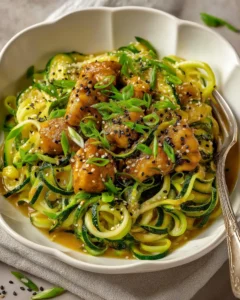
Gluten‑Free Sesame Chicken with Zoodles brings together tender chicken thighs, vibrant spiralized zucchini, and a rich sesame‑peanut sauce in a light, flavorful bowl. This dish offers a low‑carb, high‑protein twist on traditional sesame chicken by swapping rice or noodles for zucchini “noodles,” making it ideal for those seeking a gluten‑free, vegetable-forward meal. The sesame and peanut flavors balance beautifully with garlic, ginger, and a touch of heat, while the zucchini provides a crisp, fresh base. In this article you will discover how simple adjustments ensure every ingredient is safe and wholesome, along with tips for preparation, cooking, and serving.
Ingredients & Ingredient Adjustments
1.1 Core Ingredients You’ll Need
- 3 medium to large zucchinis, spiralized (yields about 1½ pounds or 6–7 cups of zoodles)
- 1 pound boneless, skinless chicken thighs, fat trimmed and cut into 1‑inch cubes
- 4 garlic cloves, minced
- 1 tablespoon creamy peanut butter
- 2½ tablespoons toasted sesame oil
- ¼ cup soy sauce or tamari (ensure it is gluten‑free and alcohol‑free)
- 2 tablespoons sesame seeds
- 2 tablespoons rice vinegar
- ½ teaspoon freshly grated ginger
- ⅛ teaspoon red pepper flakes
- ½ teaspoon kosher salt
- ½ teaspoon ground black pepper
- Optional thickener: 2 teaspoons cornstarch mixed with 1 tablespoon cold water
1.2 Ensuring All Ingredients Are Clean & Safe
Every ingredient in this list is free of pork, lard, alcohol, non‑halal rennet, or non‑permissible additives. The recipe does not call for wine, beer, or rum. It does not use vanilla extract or gelatin or cheeses made with suspect rennet. The soy sauce or tamari must be gluten‑free and should be alcohol‑free (many commercial soy sauces are naturally fermented, but you can check the label).
In case a brand includes alcohol in its processing, choose a guaranteed alcohol‑free alternative. Brands or options you might consider include (but are not limited to) San‑J Tamari Gluten‑Free Soy Sauce, Kikkoman Gluten‑Free Soy Sauce, or Bragg Liquid Aminos (if labeling indicates alcohol‑free).
For all other ingredients such as peanut butter, sesame oil, sesame seeds, rice vinegar, ginger, garlic, salt, pepper and the optional cornstarch, there are no hidden problematic components.
1.3 Adjustments & Substitutions (if needed)
- If you cannot find gluten‑free tamari or soy sauce that is alcohol‑free, you can combine a standard soy sauce (checked for no alcohol) with a little splash of water or low‑sodium broth to dilute and lighten it.
- If you prefer a nut‑free version, you could substitute sunflower seed butter, though that changes flavor.
- If you do not have sesame oil, you may use a mix of neutral oil (like avocado or canola) plus a small amount of toasted sesame oil for flavor.
- The optional cornstarch slurry helps thicken the sauce when zucchini releases liquid; you may omit it if you prefer a looser sauce.
1.4 Recipe Instructions (Clean Version)
Spiralize the zucchini using a spiralizer or purchase pre‑spiralized zucchini. Lay the zucchini noodles on a clean kitchen towel or dish towel to absorb excess moisture while you prepare the rest.
Make the sauce by combining in a jar or medium bowl: peanut butter, 2 tablespoons of toasted sesame oil, soy sauce or tamari, sesame seeds, rice vinegar, grated ginger, and red pepper flakes. Whisk until smooth and well blended.
Marinate the chicken by placing the cubed chicken thighs in a medium bowl. Season with kosher salt and ground black pepper and then pour in 2 tablespoons of the sauce. Toss to coat evenly. Let it marinate for 15 minutes (or up to 30 minutes if time allows).
Cook the chicken by heating a large nonstick skillet over medium heat. Add the remaining ½ tablespoon of sesame oil. Add the marinated chicken and cook for about 7 to 10 minutes, stirring occasionally, until the chicken is cooked through (reach at least 160°F on a meat thermometer). Then stir in the minced garlic and cook for 2 to 3 more minutes until the garlic is fragrant and cooked.
Add remaining sauce to the skillet and simmer for 2 minutes or until the sauce reduces by about half and starts to thicken.
Toss in zucchini noodles immediately, stirring gently for about 1 minute on medium heat until the zucchini is just tender but not soggy. Be careful not to overcook the zoodles—they should retain a bit of bite.
If thicker sauce is desired, stir the cornstarch slurry (2 teaspoons cornstarch + 1 tablespoon cold water) into the pan during the final minute of cooking. It will help the sauce cling nicely to the chicken and zucchini.
1.5 Nutritional Info & Serving Details
- Net carbs approximately 5.8 g per serving
- Prep time: about 10 minutes
- Cook time: about 15 minutes
- Total time: 25 minutes
- Servings: 4
- Calories per serving: ~287 kcal
- Carbohydrates: ~6.8 g
- Protein: ~25 g
- Fat: ~17 g
- Cholesterol: ~106 mg
- Sodium: ~700 mg
- Fiber: ~1 g
- Sugar: ~1.3 g
Gluten-Free Sesame Chicken With Zoodles
- Total Time: 25 mins
- Yield: 4 servings
Description
A flavorful and healthy dish featuring juicy chicken thighs tossed in a sesame-peanut sauce with spiralized zucchini noodles. Perfect for a gluten-free, low-carb meal that’s quick, clean, and satisfying.
Ingredients
3 medium-large zucchinis, spiralized (about 1 1/2 pounds or 6–7 cups zucchini noodles)
1 pound boneless, skinless chicken thighs, cut into 1” cubes
4 garlic cloves, minced
1 tablespoon creamy peanut butter
2 1/2 tablespoons toasted sesame oil
1/4 cup gluten-free, alcohol-free soy sauce or tamari
2 tablespoons sesame seeds
2 tablespoons rice vinegar
1/2 teaspoon freshly grated ginger
1/8 teaspoon red pepper flakes
1/2 teaspoon kosher salt
1/2 teaspoon ground black pepper
2 teaspoons cornstarch mixed with 1 tablespoon cold water (optional)
Instructions
1. Spiralize zucchini using a spiralizer or buy pre-spiralized. Place on a clean dish towel to absorb moisture.
2. In a bowl or jar, whisk peanut butter, 2 tablespoons sesame oil, soy sauce, sesame seeds, rice vinegar, ginger, and red pepper flakes.
3. Place chicken in a bowl with salt, pepper, and 2 tablespoons of sauce. Let marinate for 15 minutes.
4. Heat a large nonstick skillet over medium. Add remaining 1/2 tablespoon sesame oil and chicken. Cook 7–10 minutes until fully cooked (160°F internal temp).
5. Stir in garlic and cook 2–3 minutes until fragrant.
6. Add remaining sauce and simmer 2 minutes to thicken slightly.
7. Add spiralized zucchini and toss gently. Cook for 1 minute until just tender. Do not overcook.
8. Optional: Add cornstarch slurry in the last minute if the sauce is too thin.
9. Serve immediately with toasted sesame seeds and chopped green onions if desired.
Notes
Avoid overcooking the zucchini to maintain a crisp-tender texture.
Store leftovers separately to avoid soggy noodles.
Best enjoyed fresh but can be meal-prepped with sauce and chicken stored separately from zucchini.
- Prep Time: 10 mins
- Cook Time: 15 mins
- Category: Main Dish
- Method: Stovetop
- Cuisine: Asian-Inspired
Cooking Tips for Perfect Texture and Flavor
2.1 Mastering the Chicken for Maximum Flavor
The chicken is the heart of this dish. To get the best texture, opt for boneless, skinless chicken thighs over breast meat. Thighs stay juicier during cooking and absorb marinade flavors better. Trim excess fat and cut the meat into uniform 1‑inch cubes to ensure even cooking.
Let the chicken marinate for at least 15 minutes. If time allows, 30 minutes is even better. The combination of toasted sesame oil, garlic, and the soy‑peanut sauce base infuses the meat with a rich umami depth.
Use a nonstick skillet or well‑seasoned cast iron pan to avoid sticking and over‑browning. Heat your pan to medium before adding oil and chicken. Stir occasionally, but let the pieces sear slightly to get golden edges that add flavor.
Once the chicken reaches 160°F internally, add the garlic and sauté just until fragrant—about 2 to 3 minutes. Avoid letting the garlic brown or burn, as it can turn bitter.
2.2 Handling Zoodles Without Soggy Results
Zucchini is over 90% water, so careful handling is key. Start by laying the spiralized zucchini noodles on a clean dish towel for at least 10–15 minutes before cooking. This wicks away surface moisture and prevents excess liquid in your skillet.
Do not salt the zoodles before cooking, as salt will draw out even more water. When ready to cook, toss them in at the very end, and cook for just 1 minute over medium heat. You’re not looking to soften them completely—just warm them and allow them to soak up some of the sauce.
If you notice the sauce loosening due to water release, use the optional cornstarch slurry during the final minute to restore thickness and gloss. This quick trick helps the sauce coat the chicken and zucchini evenly without becoming watery.
Avoid over‑stirring. Gently fold the zoodles into the sauce and chicken mixture, just until combined.
2.3 Peanut-Sesame Sauce Secrets
The sauce is what gives this dish its bold, nutty, tangy character. Here’s how to get it right:
- Use creamy peanut butter that’s smooth and unsweetened for best balance
- Toasted sesame oil delivers the signature deep flavor—just a little goes a long way
- For brightness, rice vinegar offers a mild acidic kick. Look for plain rice vinegar without added sugar or seasoning
- A sprinkle of red pepper flakes adds gentle heat. Feel free to adjust based on spice preference
- Freshly grated ginger rounds everything out with warmth and zing
Whisk everything thoroughly until smooth. If your peanut butter is thick, let it sit at room temperature first or microwave briefly to loosen. This helps the sauce emulsify easily when mixed with the warm pan ingredients.
Use half the sauce to marinate the chicken and the rest to simmer and glaze the dish at the end. This two‑phase method ensures every bite is well seasoned.
Serving Suggestions and Pairings
3.1 How to Serve It for Maximum Appeal
This dish shines as a standalone meal, but a few thoughtful touches can elevate the experience. Once plated, sprinkle the top with toasted sesame seeds and freshly chopped scallions or green onions for a bit of crunch and color. A squeeze of fresh lime juice just before serving adds brightness and cuts through the richness of the sauce.
Serve it warm, ideally just after cooking, when the zucchini is still tender-crisp and the sauce is glossy. If you’re preparing this for guests or meal prepping, it holds well for short periods but is best enjoyed fresh.
You can also portion it into bowls for individual servings or serve it family-style in a large dish. The colorful presentation of golden sesame chicken over vibrant green zoodles is naturally photogenic and appealing without much effort.
3.2 What to Serve With It
While this recipe stands strong on its own, you can easily round out the meal with light, complementary sides:
- A simple cucumber salad dressed with rice vinegar and sesame oil offers a refreshing, crunchy contrast
- Steamed or roasted broccoli pairs well with the nutty sesame profile and adds more green to the plate
- For a bit of heartiness, serve alongside a scoop of cauliflower rice, keeping it low-carb and gluten-free
- Add a side of miso soup for a warm, comforting pairing
Beverage-wise, go for a sparkling water with citrus or a light green tea to balance the flavors. This meal is not heavy, so keep drinks equally refreshing and low in sugar.
3.3 Making it Kid- and Family-Friendly
This dish works well for families because the sauce is rich, savory, and slightly sweet from the peanut butter. If you’re serving children or picky eaters, you may want to skip or reduce the red pepper flakes to lower the heat level.
You can also cut the zucchini into shorter strands to make it easier for younger eaters to manage, or swap in lightly sautéed carrots or bell pepper strips to add variety.
If anyone in the family has a nut allergy, you can swap the peanut butter for sunflower seed butter or soy nut butter, keeping the same creamy texture with a mild flavor.
Serving it as a bowl bar—where each person builds their own with the chicken, zoodles, and toppings—makes dinner interactive and adaptable to individual tastes.
Variations and Storage Tips
4.1 Easy Variations to Try
One of the best things about this dish is its flexibility. With a few tweaks, you can personalize it based on what you have on hand or your flavor preferences.
Swap the Protein
If you’re not using chicken thighs, boneless chicken breast works just as well, though it may be slightly leaner and less juicy. For a vegetarian version, firm tofu or tempeh makes an excellent alternative. Just press it well, cube it, and pan-fry until golden before adding the sauce.
Change Up the Vegetables
While zucchini noodles are the base, you can add or substitute spiralized carrots, yellow squash, or even sweet potato noodles for added texture and color. Bell pepper strips, snap peas, or shredded cabbage can also be tossed in for a heartier, stir-fry style version.
Adjust the Sauce
To make the dish soy-free, substitute the soy sauce or tamari with liquid coconut aminos, which offers a similar salty-sweet depth. For a sweeter profile, a teaspoon of honey can be whisked into the sauce.
Add Crunch
Top the finished dish with crushed roasted peanuts, chopped cashews, or crispy shallots for an added layer of crunch and contrast.
Spice It Up
If you love heat, stir in a spoonful of chili garlic paste, Sriraja Panich Hot Sauce, or Texas Pete® Original Hot Sauce to the sauce base or drizzle on top before serving.
4.2 Storage and Reheating Tips
Refrigeration
Store any leftovers in an airtight container in the fridge for up to 3 days. It’s best to store the chicken and sauce together, but you may want to keep the zucchini noodles separate to prevent them from releasing too much water.
Reheating
To reheat, warm the chicken and sauce gently in a skillet over medium-low heat. Add the zoodles during the last minute just to heat through. Avoid microwaving zoodles for too long—they can become mushy.
Meal Prep Tips
For meal prep, spiralize your zucchini in advance and store in paper towel-lined containers to absorb excess moisture. Keep the sauce in a small jar and the cooked chicken in a separate container. Combine just before eating or reheating for the freshest texture.
Freezing Note
This dish isn’t ideal for freezing, especially the zucchini noodles, which become watery after thawing. However, the cooked chicken in sauce freezes well for up to 2 months. Just thaw overnight in the fridge and reheat before adding fresh veggies or zoodles.
Conclusion
Gluten-Free Sesame Chicken with Zoodles is a flavorful, health-conscious meal that brings comfort and balance to the table. With juicy chicken thighs, crisp zucchini noodles, and a deeply satisfying sesame-peanut sauce, it’s an easy dish to love and even easier to customize. Whether you’re eating low-carb, avoiding gluten, or simply looking for a lighter alternative to takeout, this recipe delivers rich flavor without compromise.
It’s also quick enough for weeknight dinners, adaptable for family needs, and ideal for meal prepping when you’re short on time. With proper prep and a few simple ingredient choices, you can keep this dish clean and wholesome while still indulging in bold, crave-worthy taste. Give it a try next time you want something fast, fresh, and incredibly satisfying.