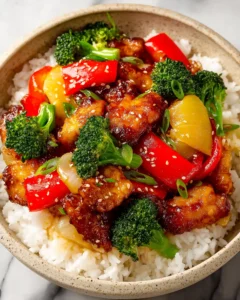
If you are looking for a quick dinner that combines savory, sweet, and nutty flavors, this Teriyaki Sesame Chicken Stir-Fry is the perfect choice. Packed with fresh vegetables, tender chicken, and a glossy sauce, this dish is both healthy and satisfying. With simple pantry staples and fresh produce, you can create a restaurant-style stir-fry in your own kitchen in less than 40 minutes. It is a versatile recipe that works well for weeknight dinners, meal prep, or even a quick lunch. What makes this dish truly stand out is the homemade sauce, a balanced blend of broth, vinegar, soy sauce, ginger, and garlic that clings perfectly to every piece of chicken and vegetable. This guide will show you step by step how to make the dish, offering useful tips along the way to ensure perfect results every time.
Preparing the Chicken and Vegetables
Step-by-Step Chicken Prep
The foundation of a successful stir-fry begins with the protein. For this recipe, boneless skinless chicken breasts are ideal. They are lean, cook quickly, and absorb flavor beautifully. Cut the chicken into even bite-sized pieces so that each cooks at the same rate. A light coating of cornstarch ensures the chicken develops a golden crust when pan-fried, giving it a tender bite and preventing it from drying out. Seasoning with garlic powder and pepper enhances the flavor before the chicken even touches the pan.
Cooking in batches is essential for achieving a rich golden sear. Overcrowding the pan will steam the chicken rather than sear it, leaving it pale and rubbery. By cooking half at a time, each piece develops that irresistible golden edge. This technique is one of the simplest tricks to elevate your stir-fry.
Choosing and Cutting Vegetables
The vegetables are just as important as the chicken. Broccoli florets, red bell pepper, and onion create the perfect trio of crunch, sweetness, and mild sharpness. To ensure even cooking, cut the vegetables into small uniform pieces. Broccoli florets should be bite-sized so they cook through without becoming mushy. Bell pepper strips should be thin enough to soften quickly, while onion slices should be no thicker than a quarter-inch for fast caramelization.
Tender-crisp vegetables are the goal for stir-fry. They should keep their bright colors, a slight crunch, and a fresh taste. Cooking them for just a few minutes preserves both nutrients and texture. For those who prefer softer vegetables, an extra minute or two of sautéing will bring them to the desired consistency without losing too much vibrancy.
Print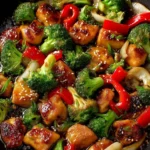
Teriyaki Sesame Chicken Stir-Fry
- Total Time: 35 minutes
- Yield: 4 servings
Description
This Teriyaki Sesame Chicken Stir-Fry combines tender chicken, crisp vegetables, and a glossy homemade teriyaki sauce. It’s quick to make in under 40 minutes and perfect for a flavorful weeknight meal.
Ingredients
2 boneless skinless chicken breasts
1/2 teaspoon garlic powder
Pepper to taste
3 tablespoons cornstarch
3 tablespoons olive oil, divided
1/2 medium onion, sliced
2 cups broccoli florets
1/2 red bell pepper, sliced
Sauce:
1/2 cup chicken broth
3 tablespoons apple cider vinegar
2 tablespoons soy sauce (alcohol-free brands: Kikkoman Less Sodium Soy Sauce, San-J Tamari, Pearl River Bridge Premium Soy Sauce)
1 teaspoon rice vinegar (or apple cider vinegar)
1/4 cup packed brown sugar
1 tablespoon cornstarch
1 teaspoon grated fresh ginger
2 cloves garlic, minced
Instructions
1. Prep all ingredients before cooking. Chop vegetables into small, even pieces so they cook evenly.
2. Whisk together the sauce ingredients in a medium bowl until smooth.
3. Cut chicken into 1-inch pieces. Season with garlic powder and pepper, then coat with cornstarch.
4. Heat 2 tablespoons olive oil in a deep skillet over medium-high heat. When hot, add half the chicken, shaking off extra cornstarch. Cook 4 minutes, flip, and cook another 3–4 minutes until golden and cooked through. Remove to a plate. Repeat with remaining chicken and the last tablespoon of olive oil.
5. If the pan looks dry, add a teaspoon of olive oil. Add onions and cook 1 minute, stirring.
6. Add broccoli and red bell pepper. Cook for 3 minutes, stirring often, until tender-crisp.
7. Return chicken to the skillet. Whisk the sauce again, pour into the pan, and stir constantly until thickened and glossy (less than 1 minute).
8. Remove from heat and serve immediately with rice or noodles, garnished with sesame seeds or green onions if desired.
Notes
This recipe is best served immediately for maximum freshness.
Pair with steamed rice, noodles, or lighter bases such as quinoa or cauliflower rice.
Vegetables should remain tender-crisp for best flavor and color.
Leftovers can be refrigerated for up to 3 days in an airtight container.
To reheat, use a skillet over medium heat instead of the microwave for better texture.
For freezing, store cooled portions up to 2 months and thaw overnight before reheating.
- Prep Time: 15 minutes
- Cook Time: 20 minutes
- Category: Main Dish
- Method: Stir-Fry
- Cuisine: Asian-Inspired
Making the Sauce and Balancing Flavors
Building the Teriyaki Base
The heart of any stir-fry lies in its sauce, and this teriyaki sesame blend is both simple and rich in flavor. Instead of store-bought bottles filled with additives, this homemade version uses everyday ingredients to create a glossy coating that ties the dish together. The base begins with chicken broth, which provides body and depth. To balance that savory element, a touch of apple cider vinegar adds brightness while enhancing the overall flavor profile.
A good teriyaki sauce always balances salty and sweet. Soy sauce delivers the saltiness while brown sugar gives the sauce its classic sweet undertone and sticky consistency. Choosing alcohol-free soy sauce brands available in the United States, such as Kikkoman Less Sodium Soy Sauce, San-J Tamari, or Pearl River Bridge Premium Soy Sauce, ensures the recipe stays accessible and flavorful for all.
Adding Aromatics for Depth
Fresh ginger and garlic elevate the sauce from good to outstanding. Grated ginger adds warmth and a subtle zing, while minced garlic provides that rich, mouthwatering aroma that makes stir-fry so inviting. These aromatics blend seamlessly with the sauce, creating layers of flavor that keep every bite interesting.
To achieve the right thickness, cornstarch is whisked into the mixture before it goes into the pan. Once heated, the sauce transforms into a silky glaze that clings to both the chicken and vegetables. Stir constantly during this stage to prevent clumping and to allow the sauce to thicken evenly. The transformation happens quickly, usually in less than a minute, which is why having everything ready before you begin cooking is so important.
Balancing Sweet, Savory, and Tangy Notes
The beauty of this sauce lies in its flexibility. If you prefer a sweeter finish, a touch more brown sugar can be added. For a tangier kick, increase the vinegar slightly. If you enjoy stronger umami, add a splash of tamari in place of soy sauce. The balance of sweet, savory, and tangy flavors makes this stir-fry universally appealing.
Another element worth noting is texture. Unlike heavy sauces, this version is glossy but not overwhelming. It enhances the natural flavors of the chicken and vegetables instead of masking them. The result is a dish that tastes light yet satisfying, ideal for pairing with steamed rice or noodles.
Cooking Techniques for Perfect Stir-Fry
Getting the Right Heat
The key to stir-fry is high heat. Using a deep skillet or wok, let the pan heat for a few minutes before adding oil. When the oil shimmers, it is ready for cooking. Olive oil is used in this recipe for its versatility and light flavor. Starting with a properly heated pan allows the chicken to sear quickly, locking in juices and creating that golden crust.
Cooking the chicken in two batches is not just a suggestion—it is essential. Crowding the pan lowers the temperature, causing the chicken to steam instead of sear. By splitting the chicken into two rounds, each piece develops a flavorful exterior while staying tender inside. Once cooked, transfer the chicken to a plate so it does not overcook while the vegetables are prepared.
Timing the Vegetables
Vegetables cook faster than chicken, so the order in which they are added matters. Onions go in first since they need a little extra time to soften and release their sweetness. Broccoli and bell peppers follow, cooking just until tender-crisp. This ensures they retain both their bright color and nutritional value. Stirring frequently prevents burning and distributes the heat evenly.
If you prefer softer vegetables, simply extend the cooking time by a minute or two. For those who like more crunch, keep the cooking brief. The flexibility of stir-fry allows you to adjust textures to your personal preference.
Bringing It All Together
Once the vegetables reach the desired doneness, the chicken returns to the skillet. At this stage, the sauce is whisked one last time and poured over the ingredients. The heat of the pan activates the cornstarch, thickening the sauce into a glossy coating that brings everything together. Constant stirring during this step ensures the sauce clings evenly to every bite of chicken and vegetable.
This final stage is quick, usually less than a minute. Overcooking at this point can cause the sauce to become too thick or sticky. As soon as everything is coated and the sauce is glossy, the stir-fry should be removed from the heat and served immediately.
Serving, Storage, and Extra Tips
Serving Suggestions
This teriyaki sesame chicken stir-fry is best enjoyed immediately, hot from the pan, when the sauce is glossy and the vegetables are vibrant. A classic pairing is steamed rice, which soaks up the savory-sweet sauce and provides a satisfying base. For four servings, about one cup of uncooked rice is usually enough, but you can adjust based on your preference. If you are looking for a lighter option, cauliflower rice or quinoa also pair beautifully with the dish, giving you extra nutrition without sacrificing flavor.
For noodle lovers, serving this stir-fry over lo mein or soba noodles is a fantastic alternative. The sauce clings to the noodles just as well as rice, creating a satisfying slurp with every bite. Garnishing with toasted sesame seeds and thinly sliced green onions adds texture and freshness, elevating the presentation with little effort.
Storage and Reheating
One of the best things about stir-fry is how well it works for meal prep. Store leftovers in an airtight container in the refrigerator for up to three days. The flavors often deepen overnight, making the next-day meal just as delicious. To reheat, use a skillet over medium heat instead of the microwave whenever possible. This method helps preserve the texture of the vegetables and keeps the chicken from becoming rubbery. If the sauce thickens too much in storage, a splash of broth or water brings it back to the right consistency.
For longer storage, this dish can be frozen. Place cooled portions in freezer-safe containers and freeze for up to two months. Thaw overnight in the refrigerator before reheating on the stove. While the vegetables may lose some of their crispness after freezing, the flavors remain intact, making it a convenient option for busy days.
Extra Tips for Success
- Prep ahead: Chop vegetables, measure sauce ingredients, and cut the chicken before starting. Stir-fry moves quickly, and having everything ready prevents mistakes.
- Keep it hot: Stir-fry depends on high heat for that signature flavor and texture. A hot pan ensures the chicken sears and the vegetables stay crisp.
- Customize vegetables: While broccoli, bell pepper, and onion are classics, you can swap in snap peas, carrots, mushrooms, or zucchini for variety.
- Control the sweetness: If you prefer a less sweet sauce, reduce the brown sugar slightly. For a stronger savory note, add a splash more soy sauce.
- Add crunch: Toasted cashews, peanuts, or sesame seeds add an extra layer of texture and nutty flavor that complements the dish perfectly.
Conclusion
This teriyaki sesame chicken stir-fry is a recipe that balances flavor, nutrition, and convenience. With tender pieces of chicken, crisp vegetables, and a homemade sauce that is savory, slightly sweet, and aromatic, it is a meal that appeals to both kids and adults alike. The cooking process is straightforward, and the flexibility of the ingredients allows for endless variations, making it perfect for busy weeknights or meal prepping ahead. By following simple techniques like cooking the chicken in batches, prepping all ingredients before starting, and balancing the sauce to your taste, you can achieve restaurant-quality stir-fry at home without stress.
Whether you serve it with rice, noodles, or lighter alternatives, this dish proves that delicious meals do not have to be complicated. With just 35 minutes from start to finish, it offers the perfect combination of speed and flavor. Try it once, and it is likely to become a regular on your dinner rotation.